A worn surface and a failed component are not the same thing. A shallow dent in a handrail may be evidence of use; a loose stair tread may require urgent attention. The task is to distinguish patina, damage and active deterioration before selecting a treatment that removes more historic material than the problem demands.
Follow the cause beyond the stain
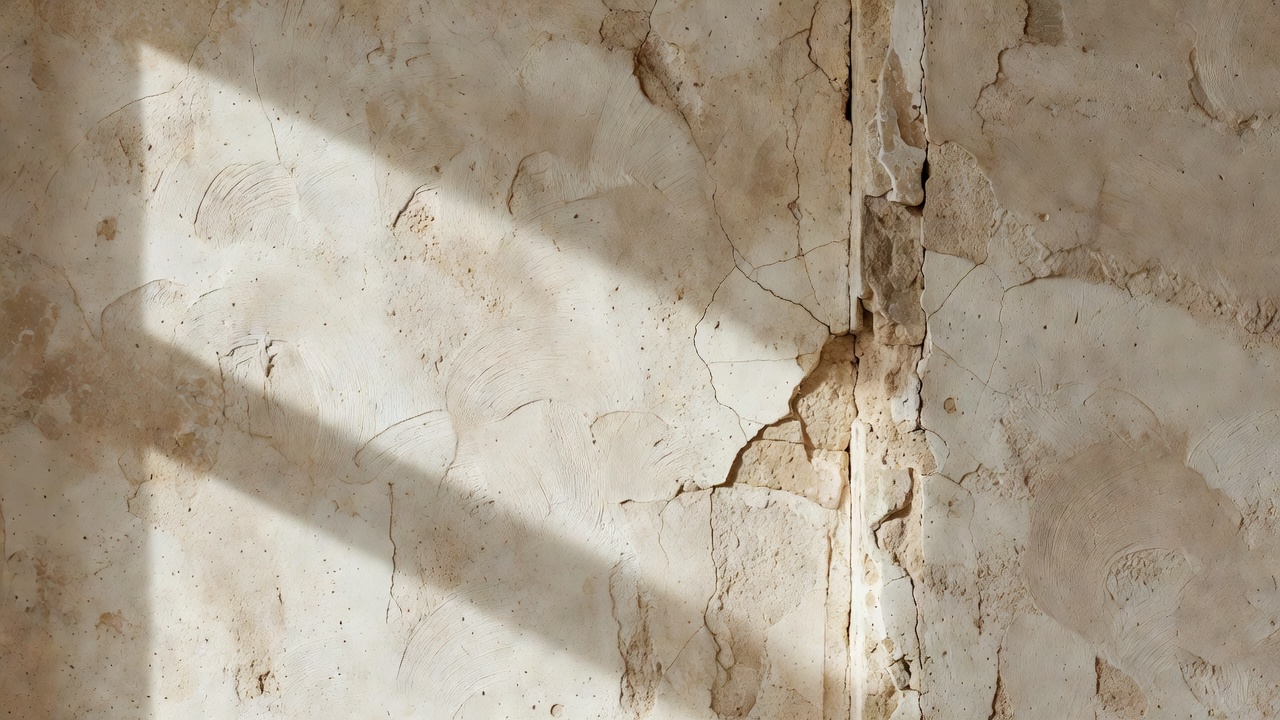
Discolouration near a ceiling may relate to a roof leak, a plumbing defect, condensation or a past event that has already been resolved. A single moisture-meter reading cannot explain all those possibilities. Record the location, weather conditions, room use and any pattern of change. Inspection of roofs, gutters, ground levels and ventilation may be more useful than immediately sealing or replastering an internal wall.
The Society for the Protection of Ancient Buildings, founded by William Morris and others in 1877, places particular emphasis on conservative repair and the care of existing fabric. Its technical advice is a useful starting point for owners, but choosing a repair still requires knowledge of the actual materials and exposure. The same visible symptom can have different causes in different buildings.
Match behaviour, not just colour
Repair materials must be compatible with the substrate and conditions. A hard, dense pointing mortar can change how a soft masonry wall manages moisture and weathering. A coating that looks attractively uniform may conceal cracking or limit drying. “Breathable” is not a complete specification: vapour movement, liquid water transport, salts, exposure and maintenance all require more careful consideration.
Historic England’s Practical Building Conservation series examines materials including stone, timber, mortars and plasters. The Building Limes Forum provides a further route into lime-related knowledge. Neither a generic lime recommendation nor a product label is enough to select a mix. Aggregate, binder, curing conditions and workmanship affect performance as well as appearance.
Small trials can reveal more than large sample boards viewed in isolation. Agree what the trial is testing: adhesion, colour after drying, surface finish or cleaning response. Photograph the area and record the method. Avoid treating a successful-looking test as proof of long-term performance; some consequences appear only with seasonal moisture or temperature changes.
Keep sound joinery working
Windows and doors are assemblies, not single disposable units. A decayed lower rail does not automatically justify replacing an entire sash. A joiner experienced in conservation can assess whether local splicing, easing, repair of joints or attention to fittings is appropriate. Existing glass, profiles and tool marks may contribute to significance even when the overall appearance seems ordinary.
Comfort improvements can sometimes be explored through careful draught reduction, working shutters, curtains or appropriately designed secondary glazing. Each has implications for ventilation, operation and visual character. The Institute of Historic Building Conservation and the Institute of Conservation are useful professional reference points when identifying relevant expertise. Check the experience of the individual practitioner, not just the familiarity of a trade title.
Keep the distinction visible
Local repair
Addresses a defined defect while retaining adjacent sound material and documenting the intervention.
Wholesale renewal
Removes an assembly and its evidence. It needs a stronger justification than visual consistency alone.
Specify the process as well as the finish
A useful repair specification identifies the defect, intended outcome, materials, workmanship, protection and inspection points. It also explains what happens if opening up reveals unexpected evidence. Work to fragile plaster, structural timber or historic decoration may require specialist assessment before anything is disturbed. Suspected asbestos, lead hazards and structural instability require appropriately qualified advice and safe working procedures.
Do not use indiscriminate stripping as a discovery method. Paint layers and concealed finishes can contain information, and aggressive cleaning may permanently change texture. A conservator can advise when analysis, limited exposure or leaving a surface undisturbed is appropriate. The aim is not to make every material appear newly installed.
Finally, keep a repair log with photographs, dates, product details, contractor information and maintenance recommendations. BS 7913, the British Standard guide to the conservation of historic buildings, is a useful framework for thinking about informed management. A repair is part of the next chapter of a house, not the end of its history. Good records allow the next owner to understand what was retained, what was added and why.
Conservation vocabulary / Patina
Surface change associated with age and use. It is not automatically harmless or significant; assessment should distinguish stable wear from active decay.